







To customize rollator walkers for your market, start with your customers, walking surfaces, sales channel and target price. This OEM component guide helps importers, distributors and medical brands compare wheels, grips, seats, brakes and frames, then turn those choices into a clear sourcing brief.
In this guide
Start with your market
- Users and terrain: target users, typical walking surfaces and frequency of seated rest.
- Daily handling: lifting, storage and folding requirements.
- Commercial fit: expected retail price and local service capacity.
Compare component choices against this brief, then confirm the combination in the quotation and approved sample.
Wheels and tires: choose for the local surface
Smaller wheels can make a rollator easier to maneuver and pack compactly. Larger front wheels generally roll over surface joints and small obstacles more easily. The trade-off is potential added size, weight and cost. A buyer serving paved shopping areas may make a different choice from one serving users who regularly cross uneven paths.
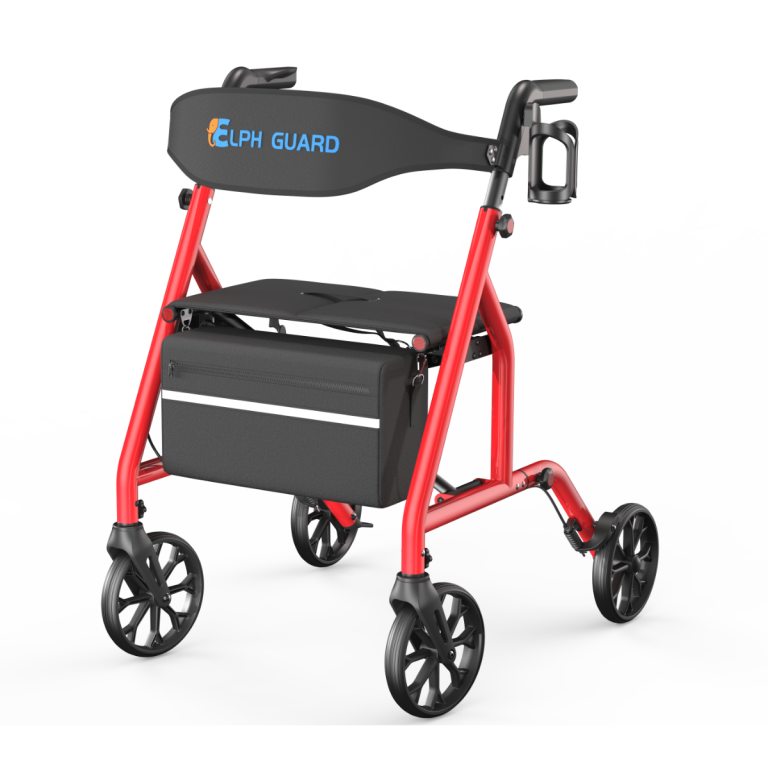
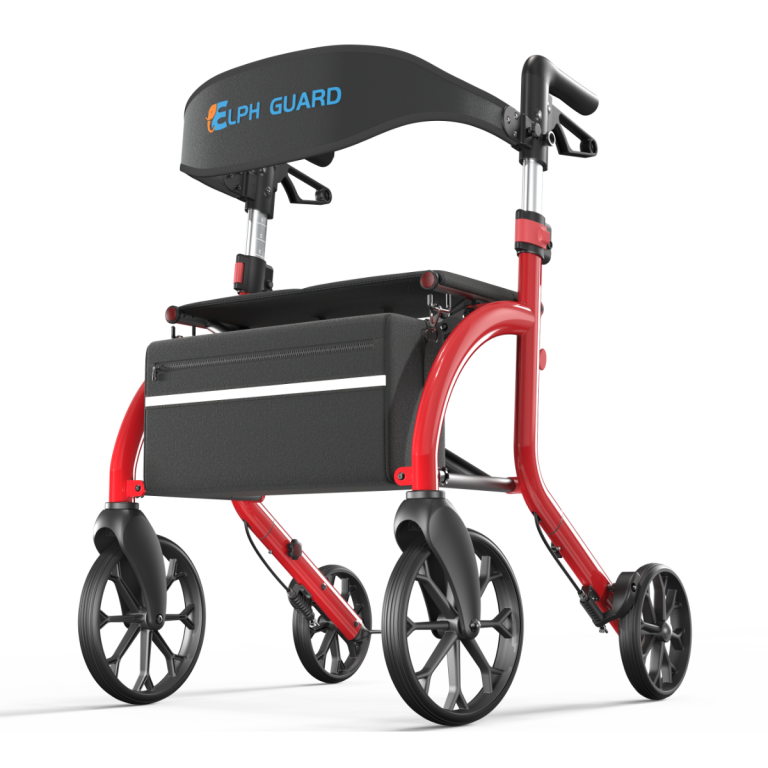
Compare tire construction
- Solid PU or rubber-like tires: no inflation; suited to channels with limited maintenance support.
- Air-filled tires: cushioning on rough ground; pressure checks and puncture repair are part of maintenance.
Tire hardness and tread also affect feel and wear. Ask how the chosen tire works with the brake system: some brakes press on the tire surface, while others operate inside the wheel hub.
Check on the sample
- Wheel diameter, width and tire material.
- Replacement-wheel details, overall width and folded dimensions.
- Performance on the surfaces common in your market.
The WHO’s rollator procurement specifications separate requirements by intended use environment.
Tell ELPH Guard where your customers will use the rollator and who will maintain it. We can use those details to compare suitable models and review the wheel and tire specification for your order.
Handgrips: test material, shape and attachment
Rollator grips on the market include hard molded plastic, textured rubber or thermoplastic elastomer, foam and more specialized rubber/cork designs. Hard surfaces are straightforward to wipe clean. Softer or contoured grips can spread pressure across the palm and feel better during longer walks, though material, texture and cleaning method affect how they age. Grip diameter and shape should suit the hand sizes of the intended users; brake levers must remain easy to reach.
| Attachment | Purchasing consideration |
|---|---|
| Removable grip | Replace the grip when worn; confirm compatible left/right spare parts. |
| Mechanically clamped grip | Resists rotation while remaining serviceable. |
| Slip-on sleeve | Check the fit and fixing method, then test rotation and pull-off resistance. |
Check on the sample
- Try the grips with dry and damp hands.
- Check for rotation or pull-off and inspect the surface after the intended cleaning routine.
- Confirm material, outside diameter, fixing method and spare-part numbers.
- Assess brake-lever reach and grip together for users with limited hand strength.
For a private-label brief, share the users’ hand-size range and cleaning routine with ELPH Guard. We can review the grip and brake-lever details of the proposed model during sample development.
Seat and backrest: match the frequency of rest
- Flexible mesh: a choice for a lighter folding product.
- Padded fabric: additional cushioning for frequent rests, with more material and bulk.
- Rigid inserts: a more supportive seat structure.
- Backrest: fixed, removable or adjustable options, depending on the design.
Compare seat-to-floor height, usable width and depth alongside the surface material.
Check on the sample
- Measure usable seating space and have intended users sit down and stand up.
- Inspect seat and backrest attachments.
- Check whether covers can be cleaned or replaced.
- Measure the effect on folded dimensions and carton size.
- Request rated seating load and test evidence for the complete configuration.
ELPH Guard supports customization of different seat and backrest types. Tell us how often users rest, the seating dimensions they need and your cleaning requirements; we can discuss suitable options for the selected rollator and confirm them on the sample.
Brakes: compare operation and service needs
Rollators typically need both a motion brake for slowing down and a parking function for stationary use.
| Design choice | What to compare |
|---|---|
| Tire-contact brake | A brake pad acts on the tire surface. Review tire compatibility and adjustment. |
| Hub brake | Braking is separated from tire wear and permits different tire choices; compare added complexity and cost. |
| Exposed cables | Easy to see and access for maintenance. |
| Integrated cables | Fewer snag points; review the repair procedure. |
Check on the sample
- Lever reach and operating force across the intended range of hand strength.
- Stopping behavior, parking engagement and release.
- Adjustment steps and spare-part availability.
- A validated one-hand braking option, if needed by the target users.
Test the assembled sample with the selected wheels and tires fitted.
If easy parking or low operating force is a priority for your buyers, include it in your brief to ELPH Guard. We can make it a specific check when reviewing the proposed model and sample.
Frame and fold: calculate value beyond material price
Steel, aluminum and carbon-fiber frames serve different price and weight targets. Steel appears in robust, value-oriented and high-capacity designs; aluminum often provides a lighter mainstream option; carbon fiber can reduce lifting weight further at a higher manufacturing cost. Rated user capacity comes from the tested complete design, not the material name.
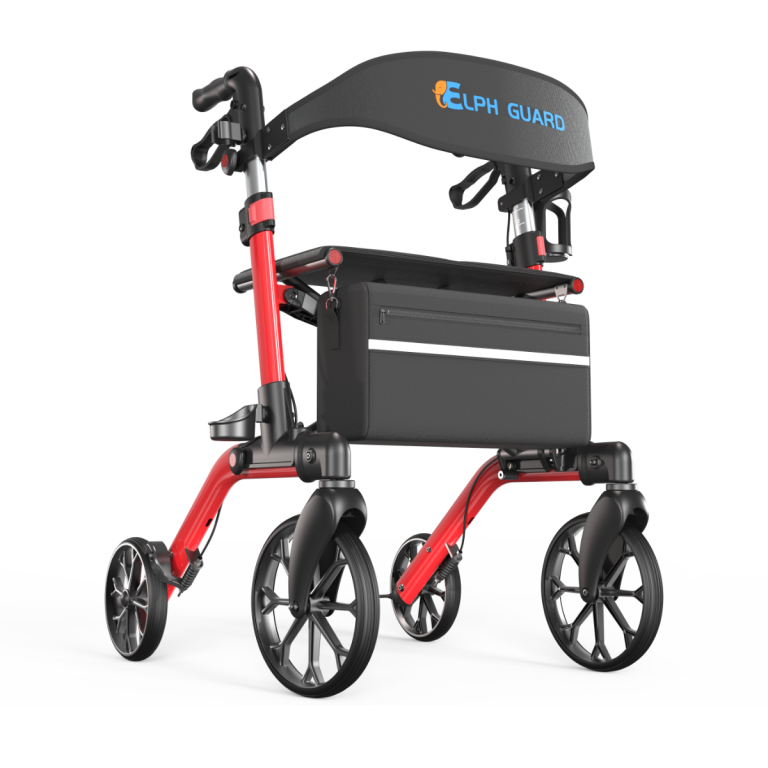
Aluminum frame
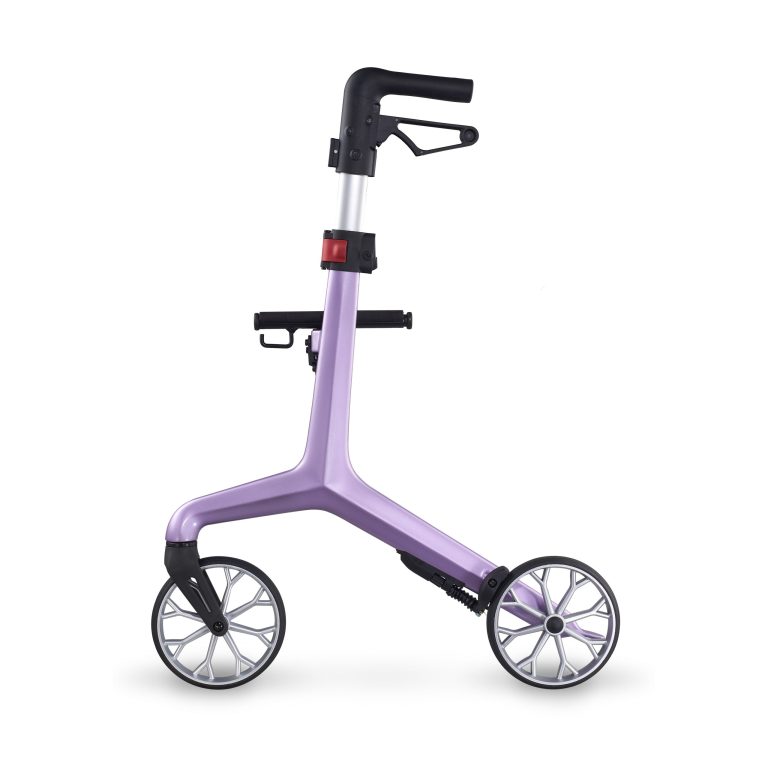
Carbon-fiber frame
Compare the weight difference, fold and material choice against user needs and landed cost.
Market designs include side-to-side folding, an additional compact fold for travel and quick-release wheels on some outdoor models.
Check on the sample
- Force and steps needed to fold; secure locking when opened.
- Folded length, width and height, plus the weight the customer actually lifts.
- Product net weight, carton gross weight, carton dimensions and units per carton.
- Removal, reattachment and locking of detachable wheels.
Share your target retail tier, lifting-weight limit and carton constraints with ELPH Guard. We can compare an appropriate existing model against those targets before discussing changes to its configuration.
Put the choices into a supplier brief
- Price-sensitive markets: maintainable frame, solid tires, accessible spare parts and straightforward brakes.
- Outdoor specialist ranges: tire behavior, braking and comfort on local surfaces.
- Travel-oriented ranges: folded dimensions, lifting weight and folding effort.
Ask suppliers to propose two or three feasible configurations against the same brief.
Request the same information for each option
- Configuration: component list, user-weight rating and included accessories.
- Measurements: handle and seat dimensions, open/folded size, net and carton weights.
- Support: spare-part list and sample.
- Quotation: unit price at your order quantity and option surcharges.
Compare answers in the same units and evaluate the samples on the same test route.
Confirm destination-market documents
ELPH Guard’s rollator products carry CE marking. For EU orders, request documents matching the exact configuration and destination, including the EU Declaration of Conformity. For U.S. orders, request the relevant FDA establishment-registration and device-listing information and applicable classification. FDA registration or listing is distinct from product approval or certification. EU guidance · FDA guidance
Explore our rollator OEM / ODM service to turn your component brief into a private label project. Share your preferred frame, component choices, target market and order quantity for a configuration proposal.