







Walkers come in eight common designs: standard, two-wheeled, three-wheeled, four-wheeled, upright, hemi, knee and bariatric. Two questions separate them: how much weight the user needs to put through the frame, and where it will be used.
Guides disagree on the number of types, and the reason is how they group them. WebMD lists four main types by wheel count. Retailer guides add hemi, knee, upright and bariatric models. Neither is wrong, because they sort by different criteria. This guide covers all eight, shows one real product per type, and notes what a buyer should check.
This article is general information, not medical advice. A physical therapist or doctor should assess which type fits a specific person.
Quick comparison
| Type | Wheels | Seat | Typical rated capacity* | Best for | Main trade-off |
|---|---|---|---|---|---|
| Standard | 0 | No | ~350 lb | Maximum stability, weight-bearing | Must be lifted each step |
| Two-wheeled | 2 front | No | ~350 lb | Smoother gait with firm support | Slower turning |
| Three-wheeled | 3 | Usually no | ~300 lb | Tight spaces, light support | Less stable |
| Four-wheeled | 4 | Usually yes | ~300 lb | Walking longer distances, rest stops | Needs balance and brake control |
| Upright | 4 | Often | ~300 lb | Posture, forearm support | Heavier, bulkier |
| Hemi | 0 | No | Varies | One functional hand or arm | Less stable than a full walker |
| Knee | 4 | No | ~350 lb | Below-knee injury recovery | Needs balance and floor space |
| Bariatric | 0, 2 or 4 | Often | 400–500+ lb | Higher body weight | Wider and heavier |
Examples below; capacity varies by model.
How the types are grouped
- Group A, weight-bearing frames: standard and two-wheeled. They suit users who may need to lean on the frame.
- Group B, rollators: three-wheeled, four-wheeled and upright. They roll continuously and have brakes.
- Group C, specialized designs: hemi, knee and bariatric. Each solves one specific problem.
Group A: weight-bearing frames
1. Standard walker
A standard walker has four legs with rubber tips and no wheels. WebMD describes it as the choice for people who need a lot of stability and will put weight on the device. The user lifts it and sets it forward. That takes upper-body strength, and the pace is slow.

Photo: rawpixel.com / Wikimedia Commons · CC0 1.0. Resized and converted to WebP.
Example: the Drive Deluxe Two Button Folding Walker (10200-1) is 6 lb, adjusts from 32 to 39 in and is rated to 350 lb.
Buyer note: simple, low-cost and compact when folded. Demand is steady in clinics and discharge programs.
2. Two-wheeled walker
Two wheels on the front legs let the user push instead of lift. WebMD notes the front wheels are fixed, so turning is slower, and the walker is somewhat less stable than a no-wheel frame.
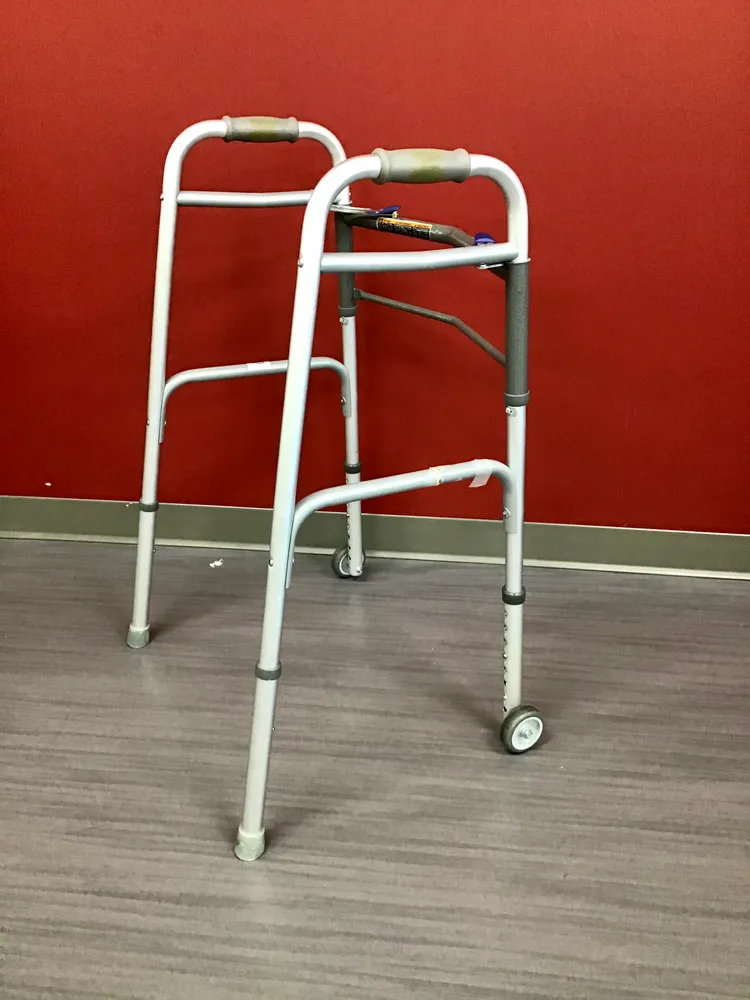
Photo: Jessica Fisher / Wikimedia Commons · CC BY-SA 4.0. Resized and converted to WebP.
Example: the Drive 10210-1 is the same two-button folding frame with 5-inch front wheels, rated to 350 lb.
Buyer note: check the rear glide caps. They determine how smoothly the frame slides on carpet and tile.
Group B: rollators
Rollators have wheels on every leg and hand brakes. WebMD advises against four-wheeled models for people with unsteady balance, because the frame can roll away.
3. Three-wheeled rollator
One swivel wheel at the front makes tight turns easy. WebMD calls it the fastest-moving walker type and a good fit for small spaces. It is less stable than a two-wheeled frame.
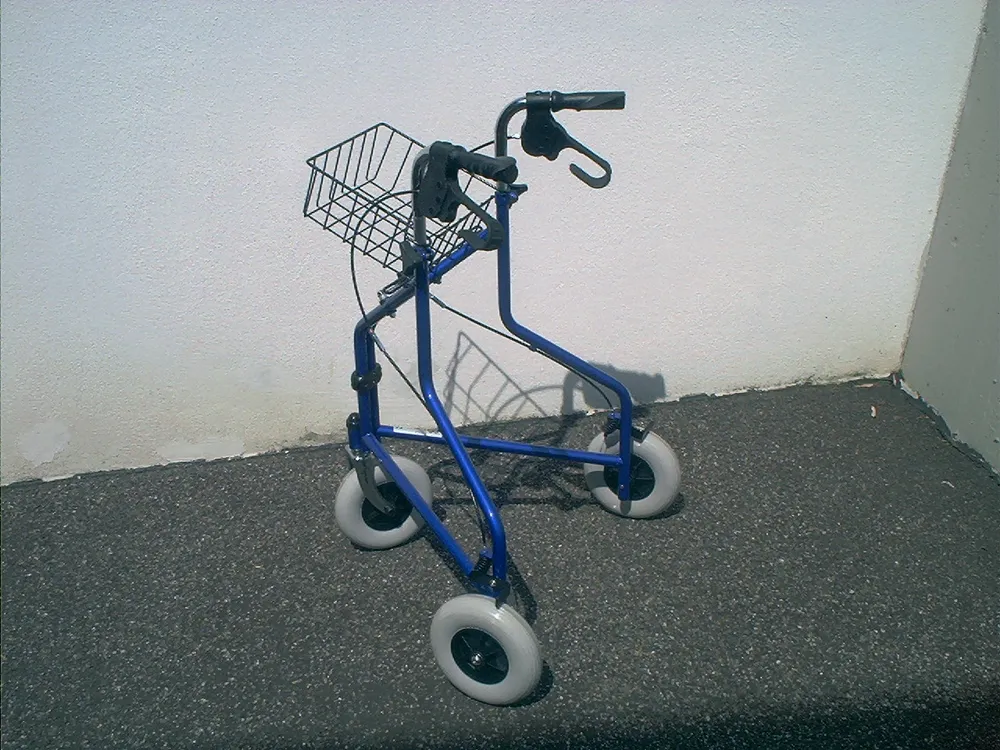
Photo: Bestrossi / Wikimedia Commons · Public domain. Resized and converted to WebP.
Example: the Drive Deluxe 3-Wheel Aluminum Rollator has 7.5-inch wheels, a 300 lb rating and 31–38 in handle heights. It comes with a basket, tray and pouch, and weighs 14 lb.
Buyer note: usually no seat. Confirm this before listing it as a “rollator with seat”.
4. Four-wheeled rollator
This is the most common rollator. A seat gives rest stops, and the frame suits outings, shopping and longer walks. It trades some stability for convenience and weighs more than a basic walker.
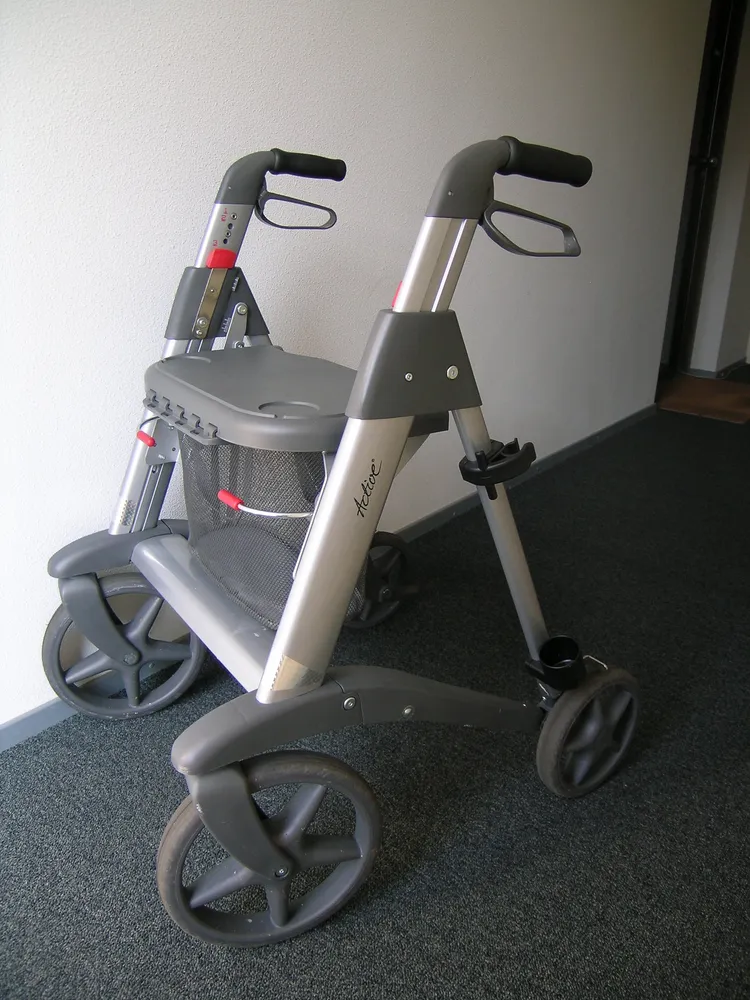
Photo: DirkvdM / Wikimedia Commons · CC BY 3.0. Resized and converted to WebP.
Example: the ELPH Guard EG-04 is an aluminum four-wheeled rollator with 10-inch front wheels, adjustable handles and a resting seat. Its frame folds for storage and transport.
Disclosure: ELPH Guard supplies the EG-04 to wholesale buyers.
Buyer note: ask whether the quoted weight includes the backrest and bag. The same model can be listed at different weights depending on what is counted.
5. Upright walker
Upright walkers have padded forearm supports and higher handles. The user stands tall instead of leaning forward. The trade-off is bulk. Rehabmart notes they are heavier and bulkier than standard or two-wheeled walkers.
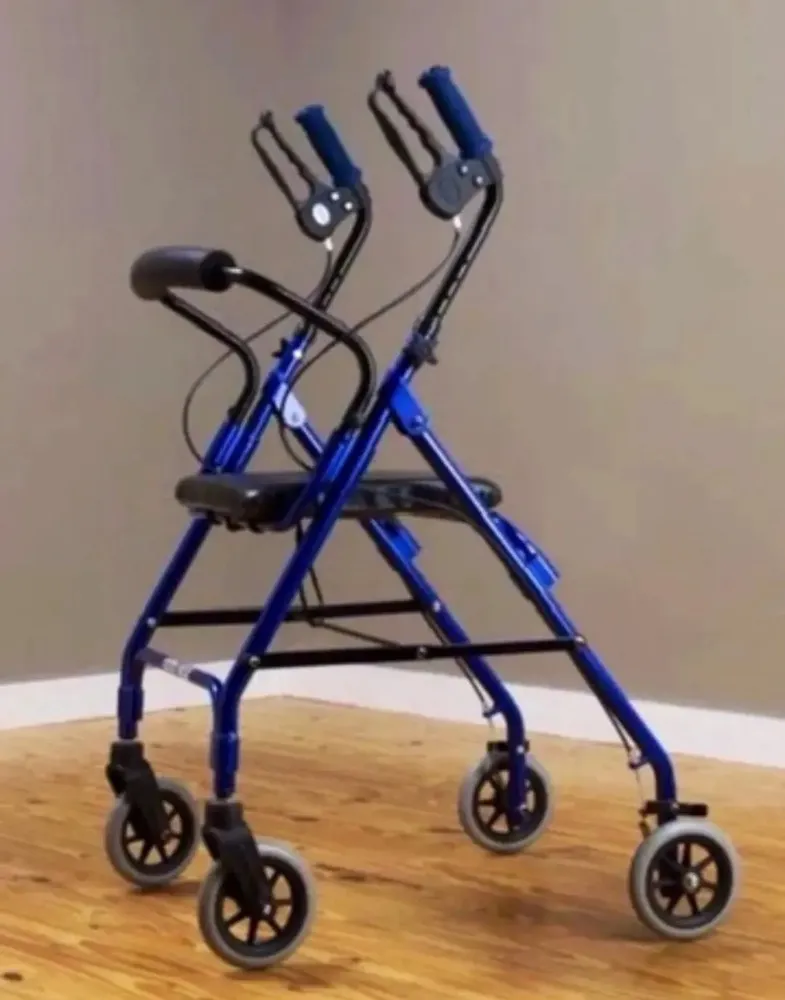
Photo: Pot2156 / Wikimedia Commons · CC BY 4.0. Resized and converted to WebP.
Example: the Drive Elevate Upright Walker weighs 23 lb, is rated to 300 lb and includes a seat and 10-inch front wheels.
Buyer note: the rollator standard ISO 11199-2:2021 does not cover rollators with horizontal forearm supports. Those fall under ISO 11199-3 (walking tables). Ask the supplier which test report applies.
Group C: specialized designs
6. Hemi walker
A hemi (side) walker is a single-sided frame for people with one functional hand or arm, for example after a stroke. It gives a wider base than a cane but less support than a full walker.
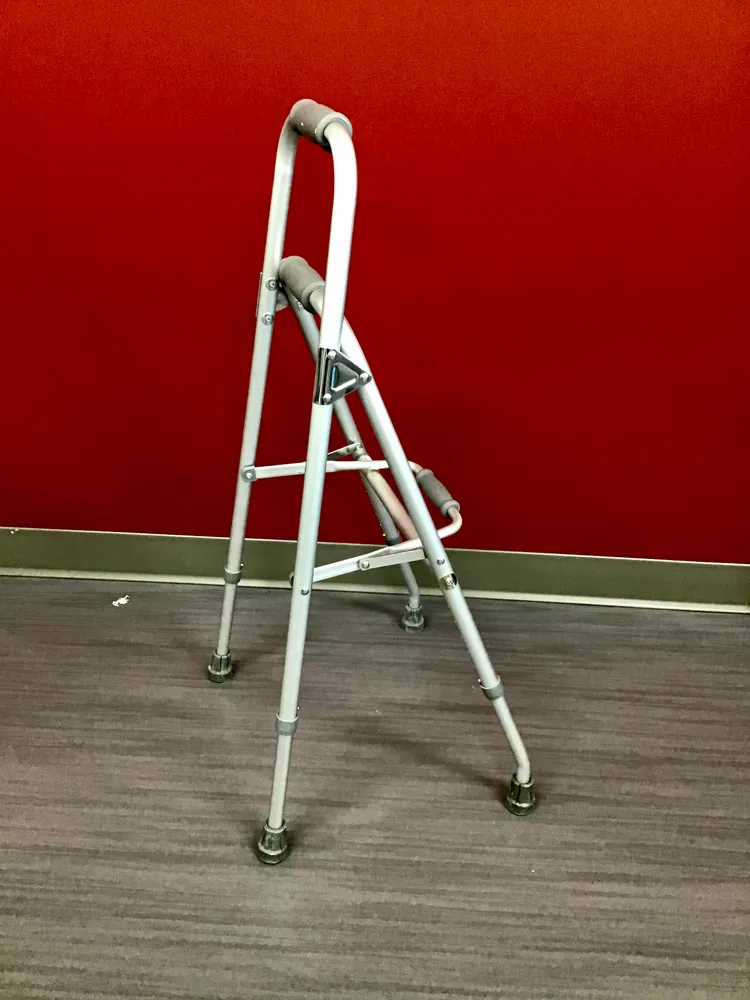
Photo: Jessica Fisher / Wikimedia Commons · CC BY-SA 4.0. Resized and converted to WebP.
Example: the Drive Side Style Hemi Walker (10240-1) adjusts from 28.5 to 35.5 in and weighs about 4 lb.
7. Knee walker
A knee walker is a wheeled platform. The user kneels on the injured leg and pushes with the other. It is a crutch alternative for foot and ankle injuries, so it is not a walking frame in the usual sense. It needs good balance and enough floor space.
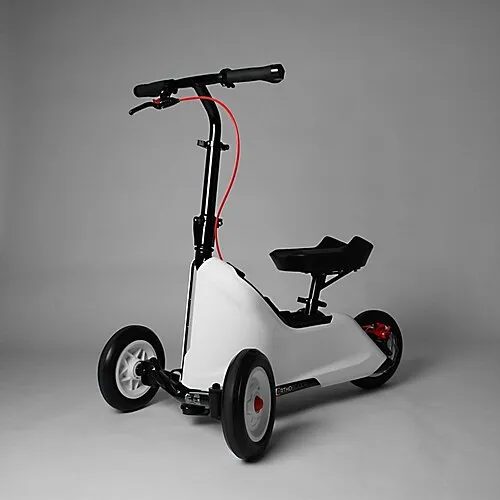
Photo: ORTHOSCOOT ADVANCED MOBILITY / Wikimedia Commons · CC BY-SA 4.0. Resized and converted to WebP.
Example: the Drive Nitro Glide Knee Walker weighs 23 lb and is rated to 350 lb.
Buyer note: list and market it separately from walkers and rollators.
8. Bariatric walker
Bariatric models have wider frames, reinforced construction and higher ratings. Capacities typically run from 400 to 500 lb or more. Many types come in a bariatric version.
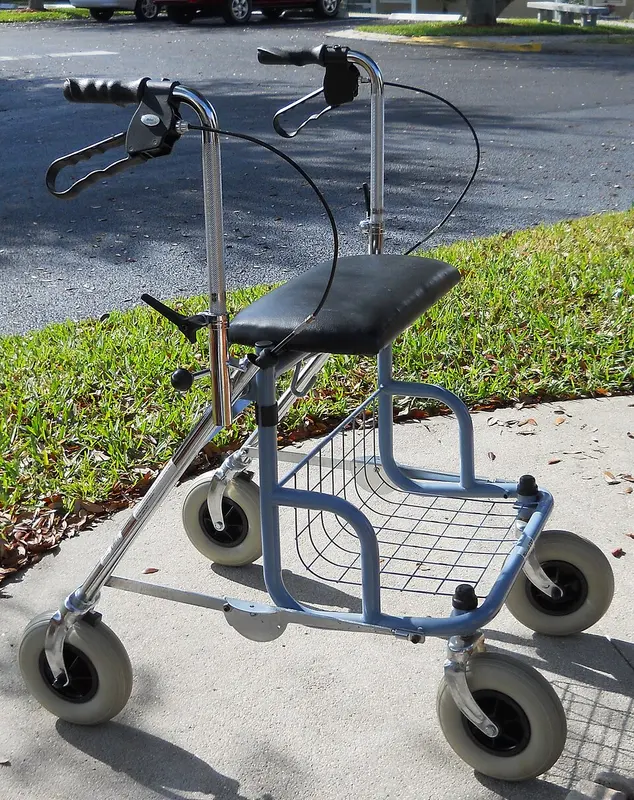
Photo: Stephen B Calvert (Clariosophic) / Wikimedia Commons · CC BY-SA 3.0. Resized and converted to WebP.
Example: the Medline Heavy-Duty Bariatric Rollator is rated to 500 lb, has a 17.5-inch seat and 8-inch wheels, and weighs about 24 lb.
How to choose: four questions
- Does the user need to lean on it? If yes, a standard or two-wheeled frame. If the main issue is endurance, a rollator.
- Where will it be used? Tight indoor spaces favor three-wheeled or standard frames. Outdoors favors larger wheels.
- Is a seat needed? Four-wheeled and upright types usually have one.
- Body weight and height? Check the rated capacity and handle range.
Have a clinician check the fit, and have the user practice on carpet, tile and outdoor surfaces before relying on it.
Buyer checklist
- Rated capacity, and the test standard behind it (ISO 11199-1, -2 or -3 depending on type).
- Which weight is quoted: with or without backrest, bag and accessories.
- Wheel size and material.
- Brake type.
- Handle height range versus your target market.
- Folded dimensions and carton size.
- Seat dimensions, if a seat is included.
- Warranty and replacement-part availability.
Our rollator order checklist goes deeper on supplier questions.
FAQ
How many types of walkers are there? Four in the simplest grouping (standard, two-wheeled, three-wheeled, four-wheeled). Eight if you include hemi, upright, knee and bariatric designs.
What is the difference between a walker and a rollator? A standard walker has no wheels, or two front wheels, and stays put when leaned on. A rollator has three or four wheels and brakes and rolls continuously. See also Zimmer frames: meaning and common types.
Which type is best outdoors? Rollators with larger wheels handle uneven ground better, as long as the user has the balance to control them.
Is a knee walker a walker? Not in the usual sense. It supports one leg’s weight on a platform and is used during injury recovery.
Sources
WebMD: How to Choose a Walker for Older Adults
Cleveland Clinic: Walkers
Mayo Clinic: Tips for choosing and using walkers
ISO 11199-2:2021
Manufacturer product pages linked above (specifications checked Nov 2026)