







A rollator accompanies its owner into shops, cafés and other public spaces. Its appearance becomes part of how that person presents themselves. For mobility brands, this deserves attention when choosing a product range.
A qualitative study of rollator customer reviews found that users discussed appearance alongside practical concerns. Some described modern styling positively and connected it with how they felt about using the product in public. These were personal experiences, with preferences that varied between users. Read the study.
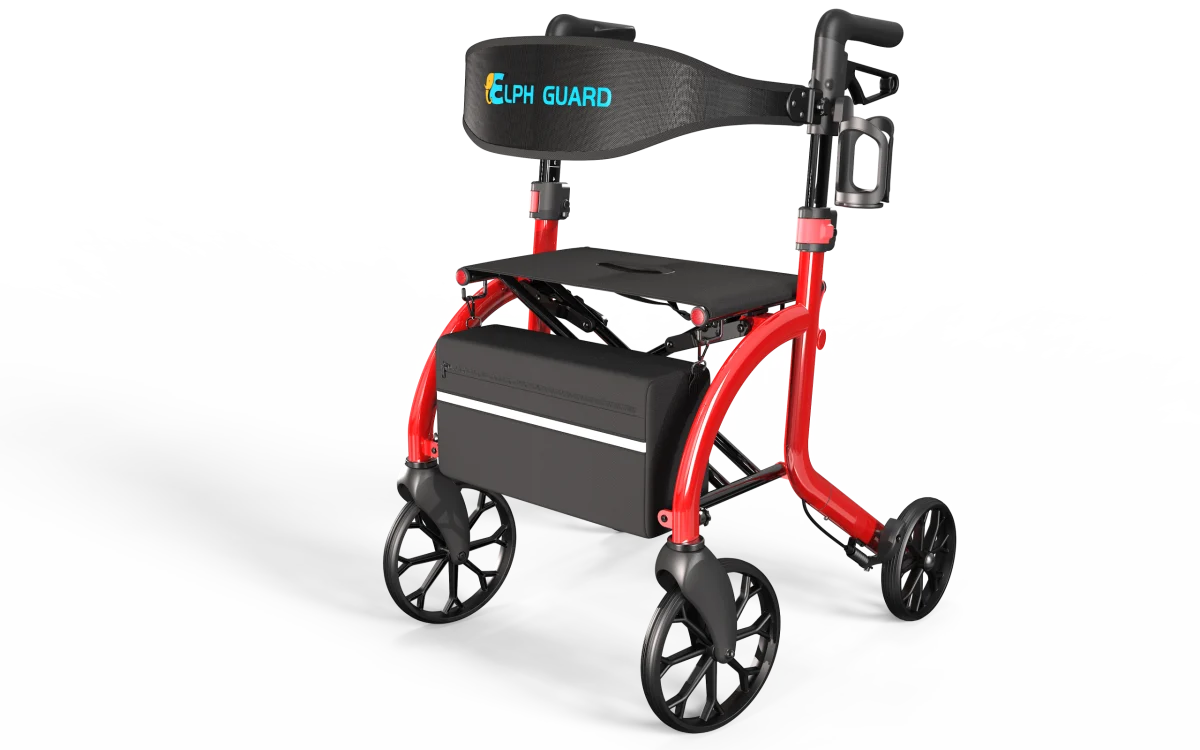
A cleaner frame starts with the details
The frame establishes the rollator’s outline. Curved tubing can soften its appearance, while the position of joints and cross-braces affects how visually busy it looks.
Brake cables and adjustment mechanisms also contribute. Routing cables close to the frame gives a cleaner outline and keeps them from hanging loosely beside it. Consistent finishes across joints and fasteners help the separate parts look like one product.
Visual lightness and physical weight are separate qualities. A frame can look compact while still being heavy to lift. Both deserve attention when developing a range.
Make the bag and backrest part of the design
A storage bag occupies a large part of a rollator’s front view. Its shape can follow the frame, and its fabric and trim can coordinate with the backrest. These choices give a brand more room to develop a recognisable appearance than a logo alone.
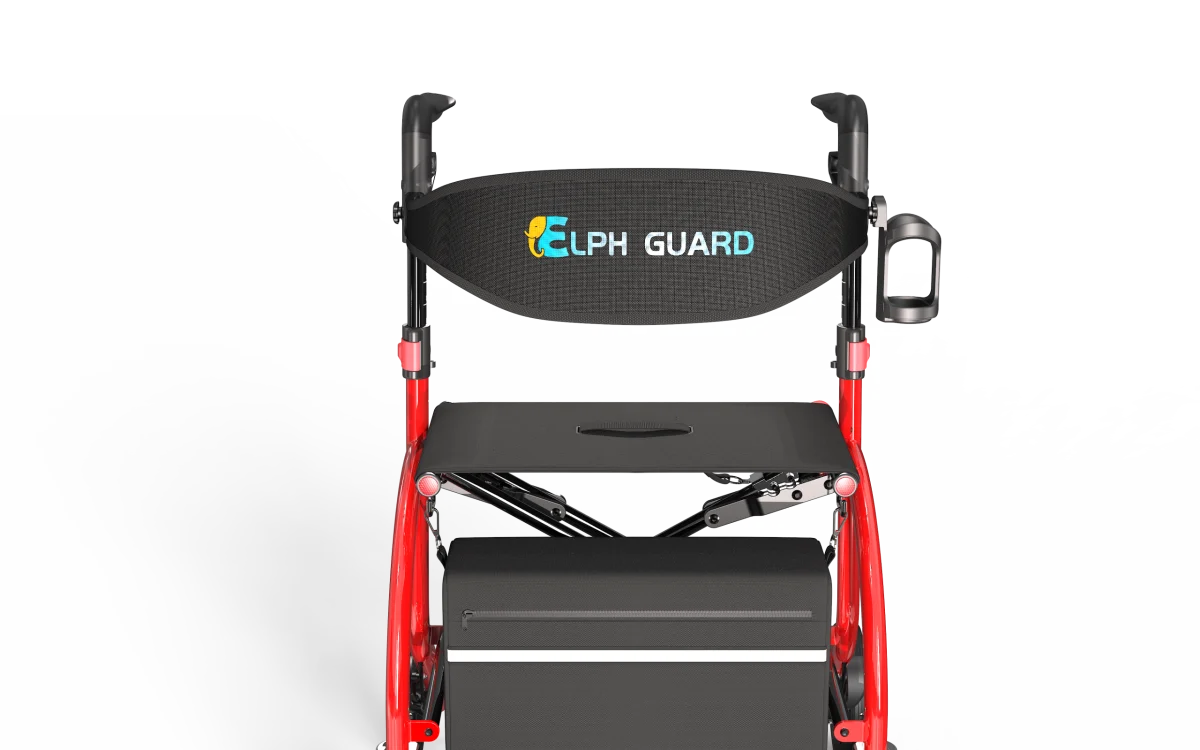
The opening needs equal consideration. Can someone reach inside while standing behind the handles? Does the bag keep its shape when partly empty? Can it be removed for cleaning without a complicated sequence of straps?
These details affect how the product looks after purchase, when it is carrying personal belongings and being used every day.
Keep the operating parts easy to recognise
A clean appearance should leave the controls clear. Brake levers need room for the hand, and the folding release should be easy to identify. Height-adjustment markings should remain legible against the frame finish.
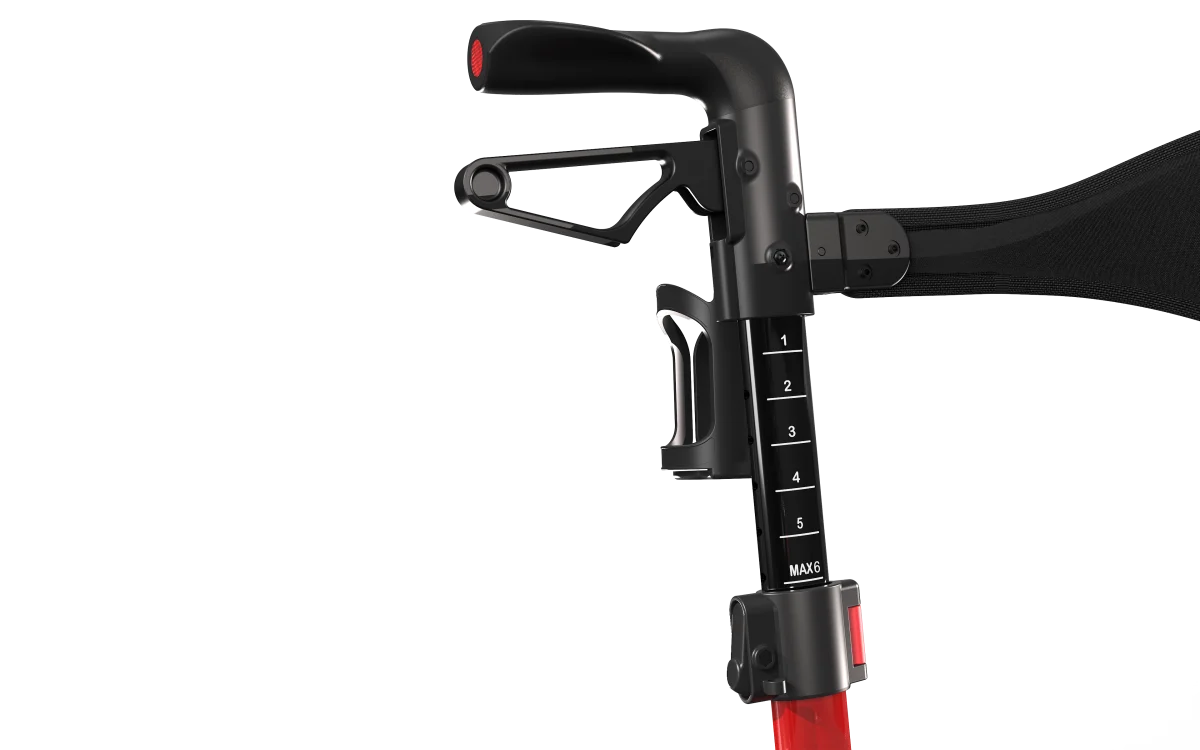
Colour can help distinguish an operating part from the surrounding structure. This gives it a practical role as well as a decorative one. Concealing every mechanism may produce a tidy photograph, but can make the product harder to understand.
For ELPH Guard’s rollator range, existing frame designs provide a starting point for coordinated colours, bags and backrests. The aim is a consistent appearance that carries through to the parts people touch and use.